01 · Overview
Motherhood can hold more than one feeling at a time.
A mother can love her child deeply and still feel exhausted, lonely, anxious, angry, or overwhelmed. Those feelings can be difficult to share, especially when she feels pressure to seem grateful or have everything under control.
Enora was created around a simple idea: women deserve a place where they can be honest about how they feel without being judged or told they are doing motherhood wrong.
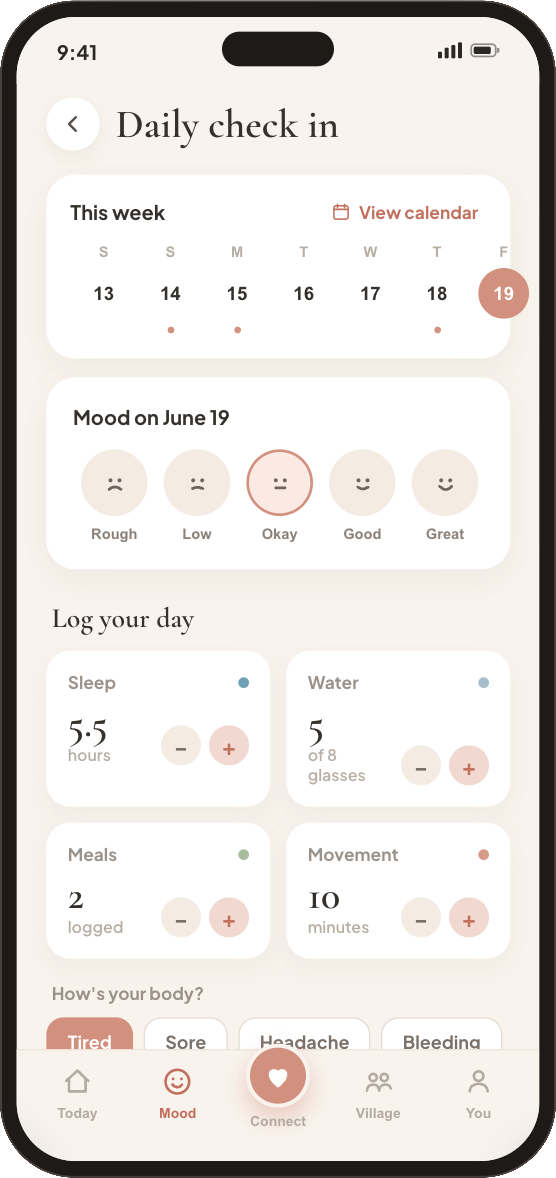
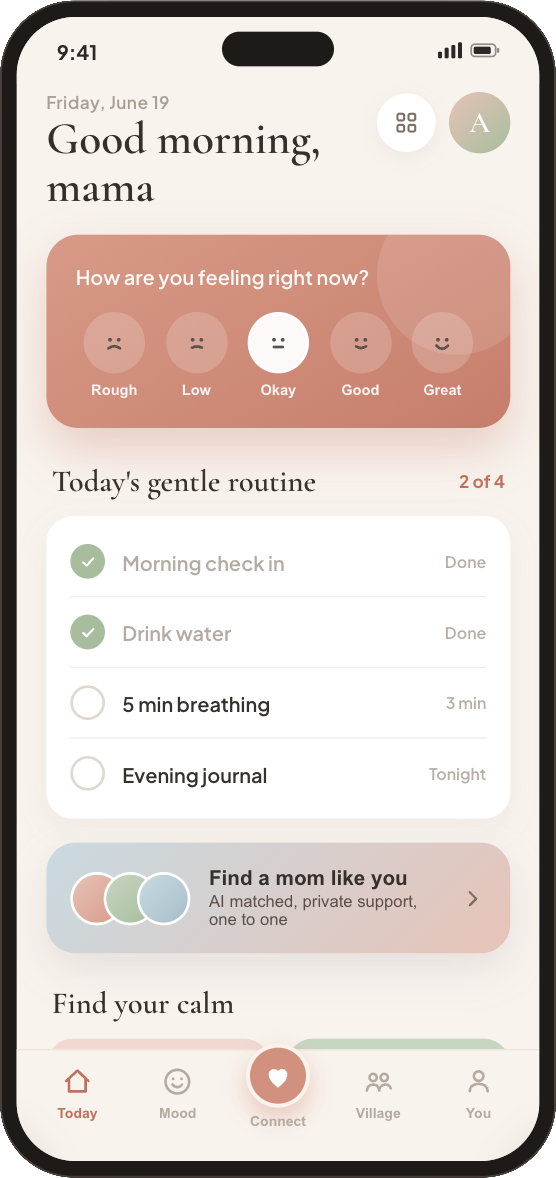
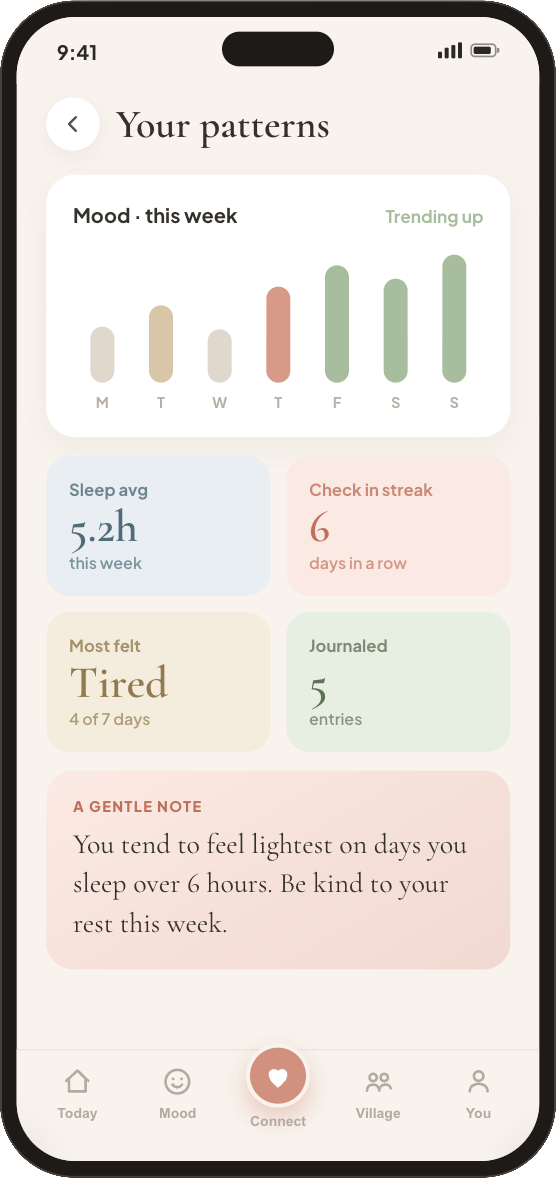
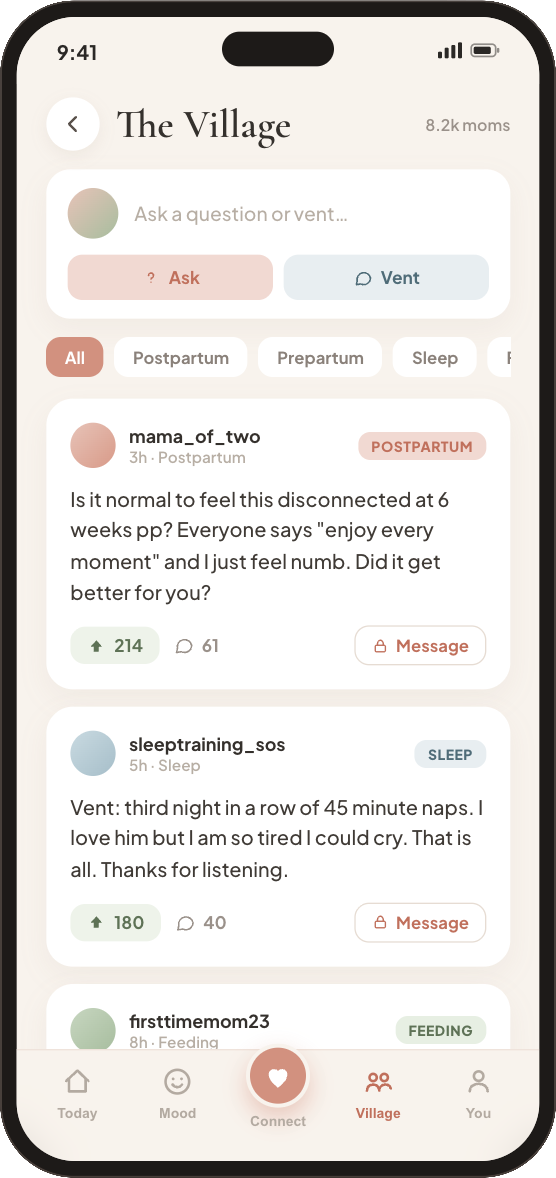
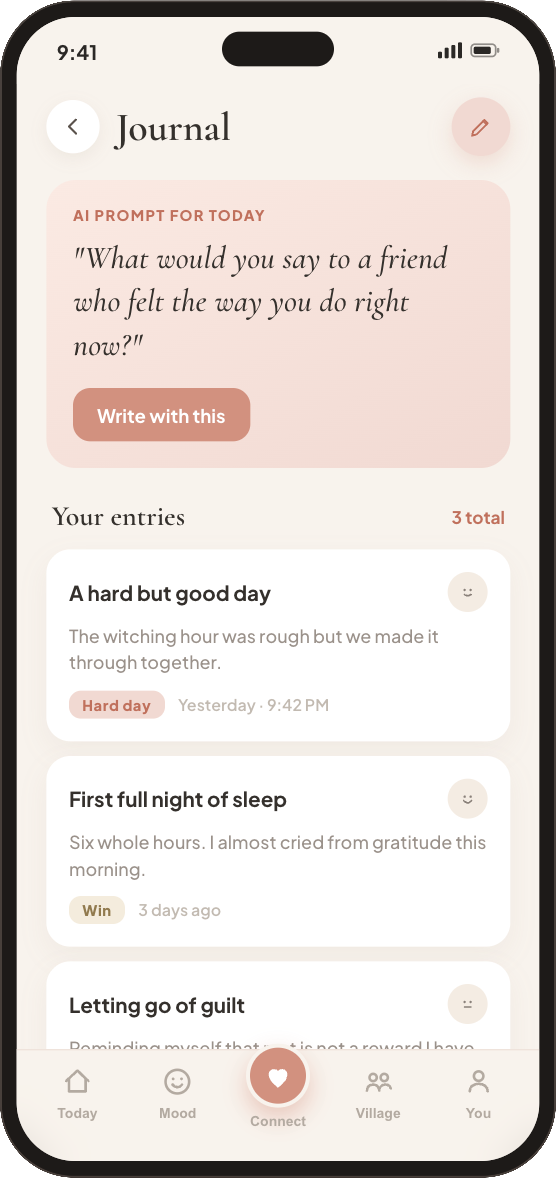
The product brings several forms of support together, so a user can choose what feels right in that moment, whether that is writing privately, taking a breath, talking to a companion, or connecting with another mom.
02 · The opportunity
Support that meets someone where she is.
Emotional support is not always one conversation or one activity. Some days a mother may want a quiet moment alone. Other days she may want to know someone understands.
I wanted Enora to make those different options easy to find without making the experience feel clinical, overwhelming, or prescriptive.
The goal was to create a warm and approachable space that respects privacy, offers connection, and allows contradictory feelings to exist together.
03 · My role
I created Enora under Celestial Works and directed the product from its early concept through a working app.
My work included:
- 01Defining the product direction and emotional tone
- 02Shaping the experience across reflection, community, connection, and calming tools
- 03Making product decisions about privacy, safety, and access to support
- 04Reviewing the visual experience and feature flows
- 05Working with Claude Code to build the app in React Native and Expo
- 06Planning the testing, refinement, and store work still needed before launch
04 · The product experience
Different kinds of support, in one place.
05 · Designing for emotional safety
No shame. No pressure to feel a certain way.
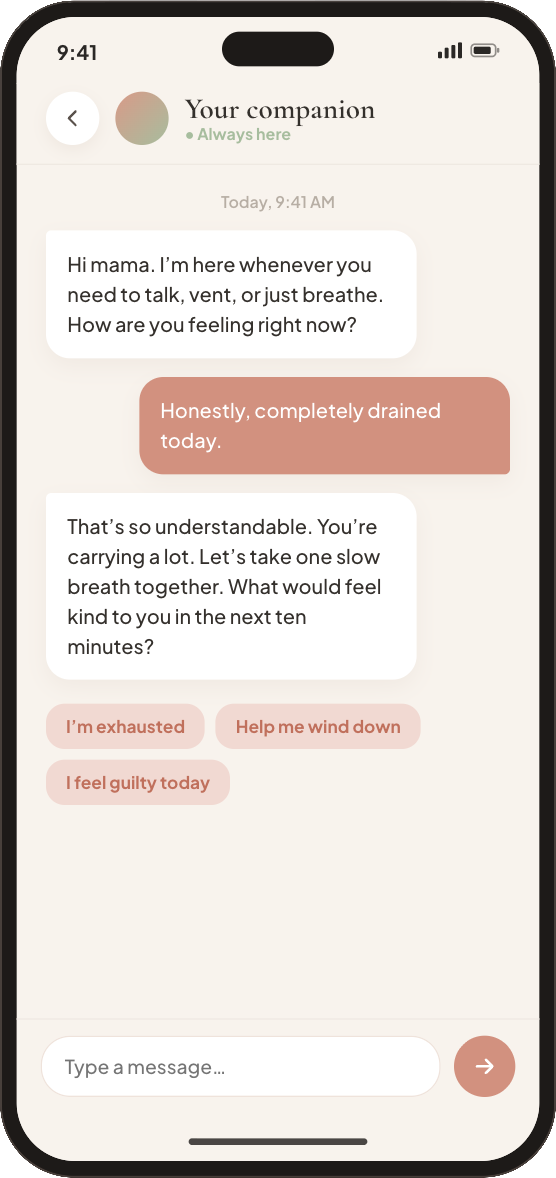
Enora’s tone is a core part of the product experience.
The app is not designed to tell someone she should enjoy every moment, be more grateful, or compare her struggles to someone else’s. It makes room for a range of emotions without treating those feelings as a failure.
That principle informed the product direction, companion language, private reflection, and the choice to give users multiple ways to seek support.
06 · Key product decisions
07 · From design to working app
The design handoff covered 11 flows and 41 screens, including the visual direction, app icon, and product logic.
I worked on Enora by myself, from the idea through the design, then worked with Claude Code to build the app in React Native and Expo for iOS and Android. I built the screens first so the app could be reviewed as a connected experience, then began connecting accounts, data, the companion, community, messaging, and other product systems.
The current build includes 35 screens in code. Automated checks have been run, and selected flows have been viewed in a simulator. That is not the same as a complete end to end test.
08 · Current status
Built, with testing and refinement ahead.
Enora has not launched. The app has been built, but it has not yet been fully tested on real iPhone and Android devices or through a complete journey with a real account.
The work ahead includes testing the AI companion and community flows, completing sign in and subscription setup, reviewing privacy and safety, refining accessibility and interaction states, and preparing the store submissions.
A launch around January 2027 is being considered, but the timing is not final.
09 · What this project shows
Enora shows how I approach a product where the emotional experience matters as much as the interface.
The work brings together product direction, supportive language, privacy, community safety, and thoughtful feature decisions in a single experience.
It also reflects how I move a product from an early idea into a working app while staying honest about what still needs to be tested and completed.